Our Research Mission
We combine experiments and computational models to understand how neural circuits generate goal-directed behavior.
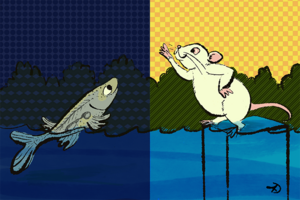
We study how animals use vision to interact with their environment during predator/prey interactions and how the neural circuitry enables this.
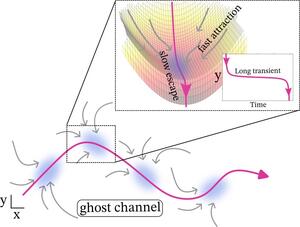
We focus on identifying basic dynamical principles of biochemical computations and single-cell learning.
We study the behavior and sensory basis of magnetic compass orientation, using subterranean mole-rats as a model system.
We are interested in how the small nervous system of the fruit fly Drosophila controls rapid steering maneuvers during flight.
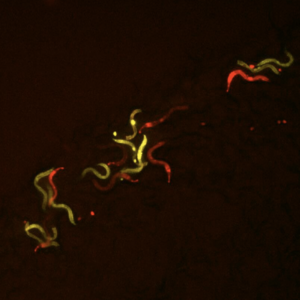
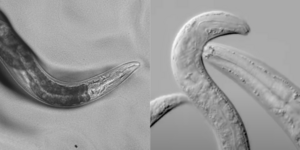
We explore the evolution of complex behaviors by investigating behavioral diversity across comparative nematode species.
We study how compact, analog brains compress sensory information and internal state into foraging decisions, and how this computation has changed over evolutionary time.
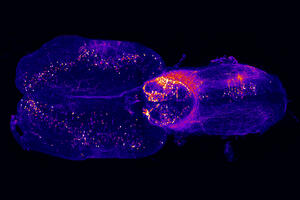
We reconstruct neural networks and elucidate mechanistic principles of how the brain integrates sensory information.
24.09. 18:00 - 21:00 International Club of the University of Bonn
Keep reading
News
Research News | 5 Jun 2026
Research News | 28 Jan 2026
Institute News | 8 Jul 2026
Institute News | 24 Apr 2026
The International Max Planck Research School for Brain & Behavior offers a fully funded doctoral program with excellent training in neuroethology and neuroscience. Doctoral researchers work with cutting-edge technologies and gain the skills to conduct independent research in an international environment.
Join our international and interdisciplinary community at MPINB. Explore current opportunities in research, technology, administration and science support.
At MPINB, we are committed to an inclusive working environment in which everyone has equal opportunities to develop their talents and careers. We support diversity, work-life balance and a culture of respect across all areas of the institute.